Origin: China Circa: Qing Dynasty, 19th century,
H. 14 in. (35cm), W. 12 in. (30cm), D 6 in. (15cm)
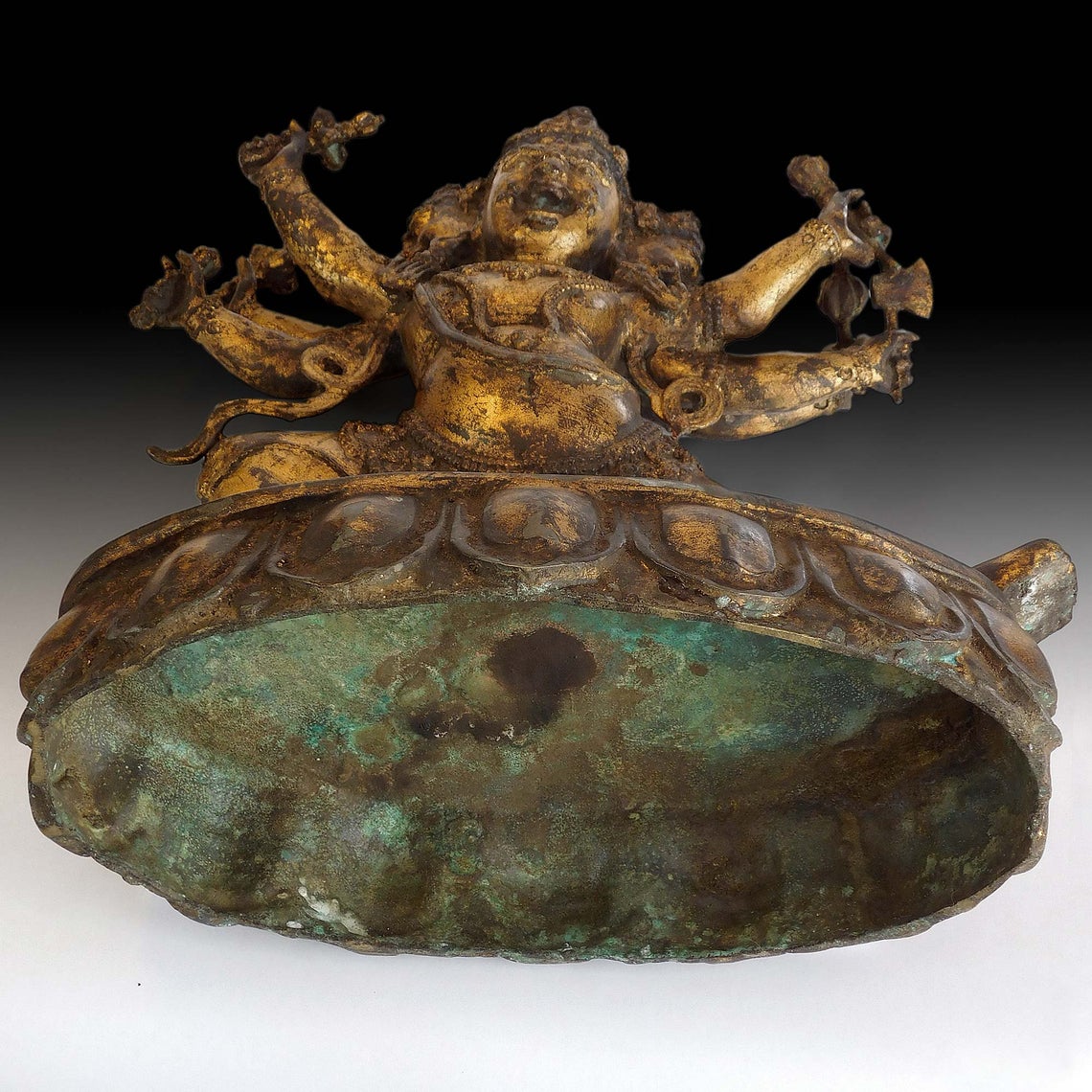
Gilt loss, overall very good condition.
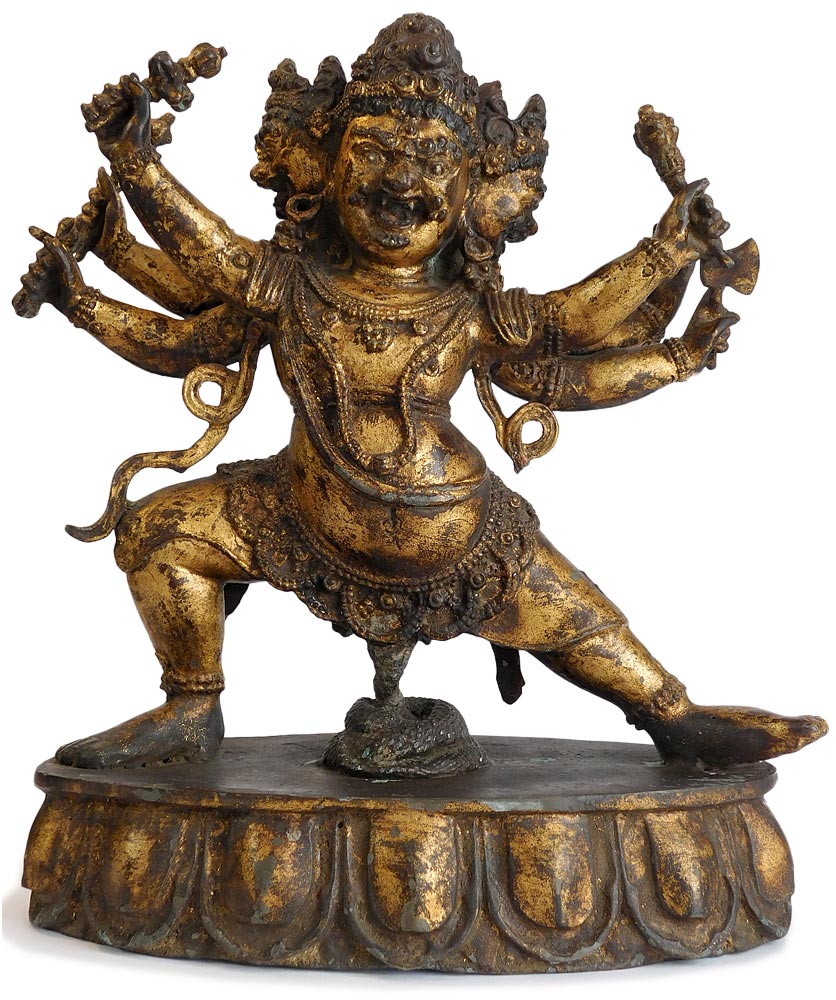
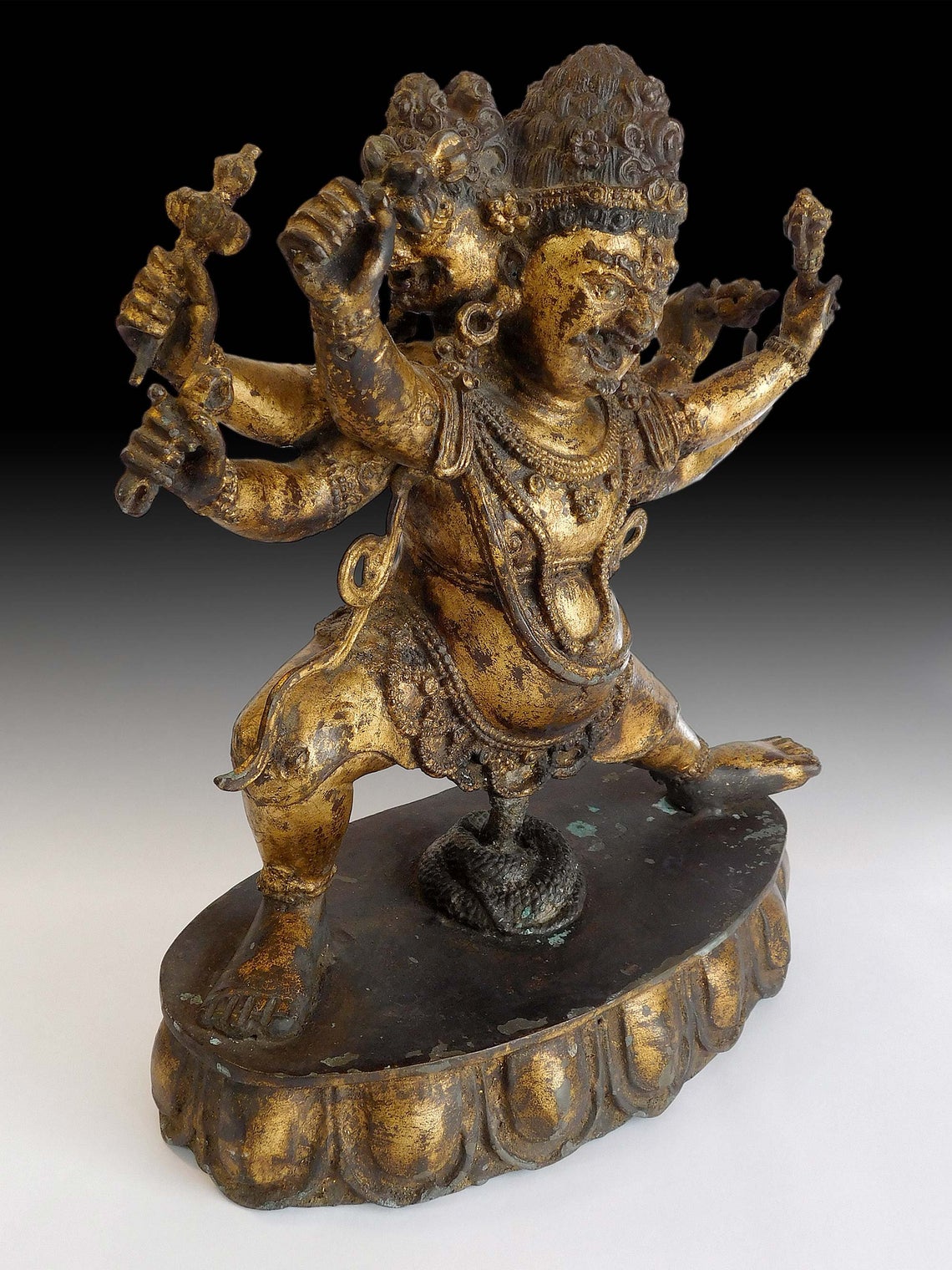
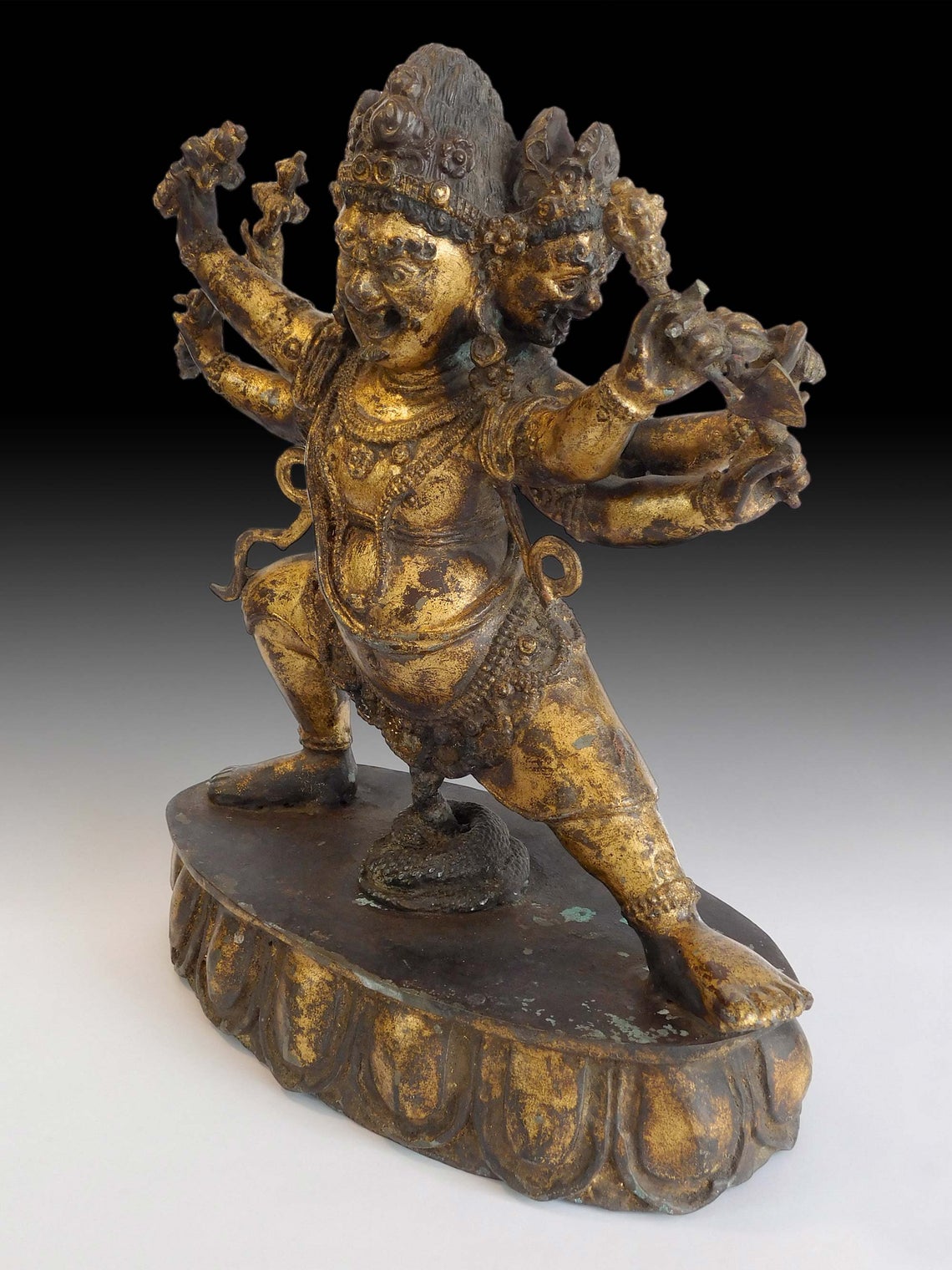
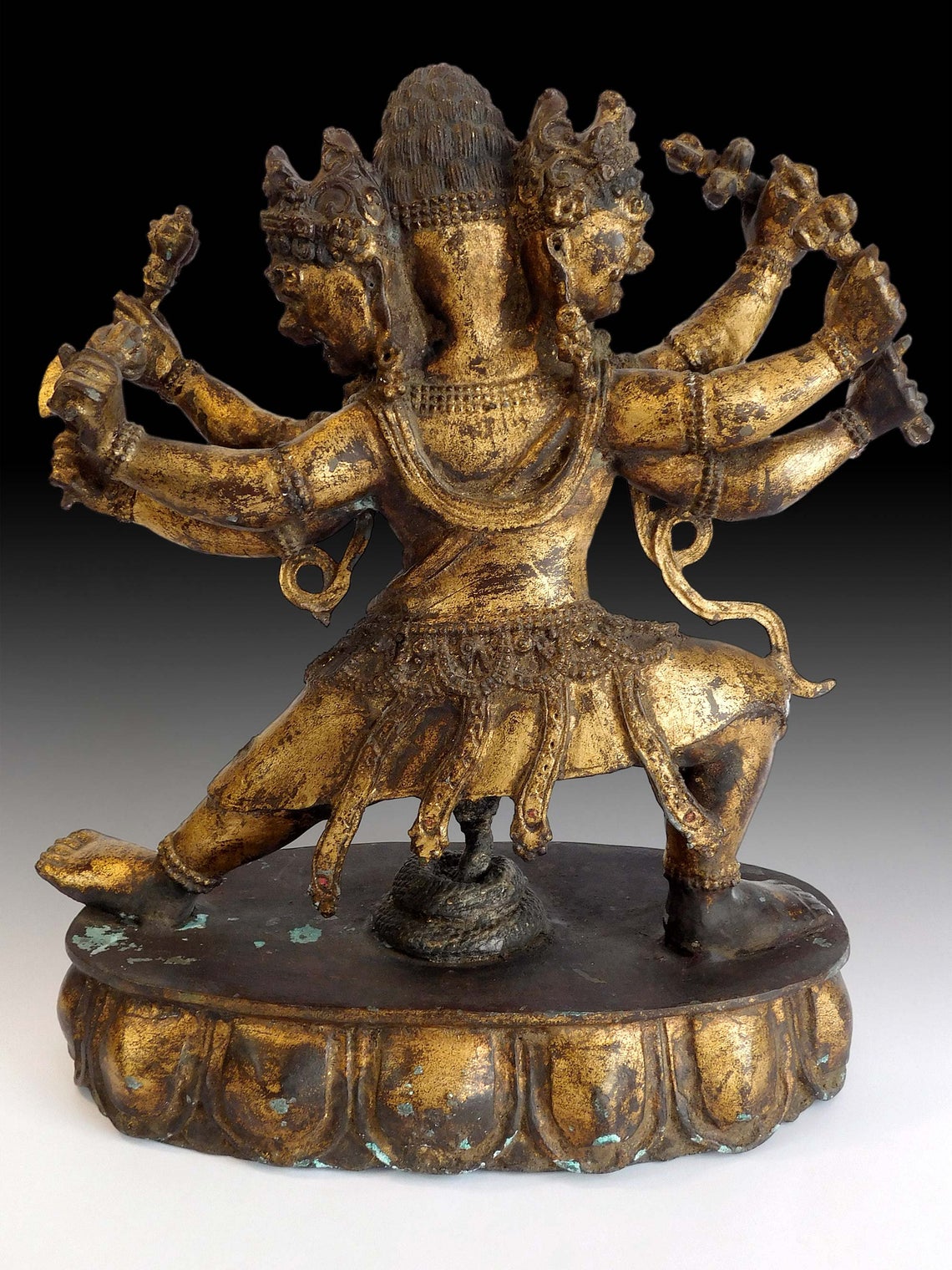
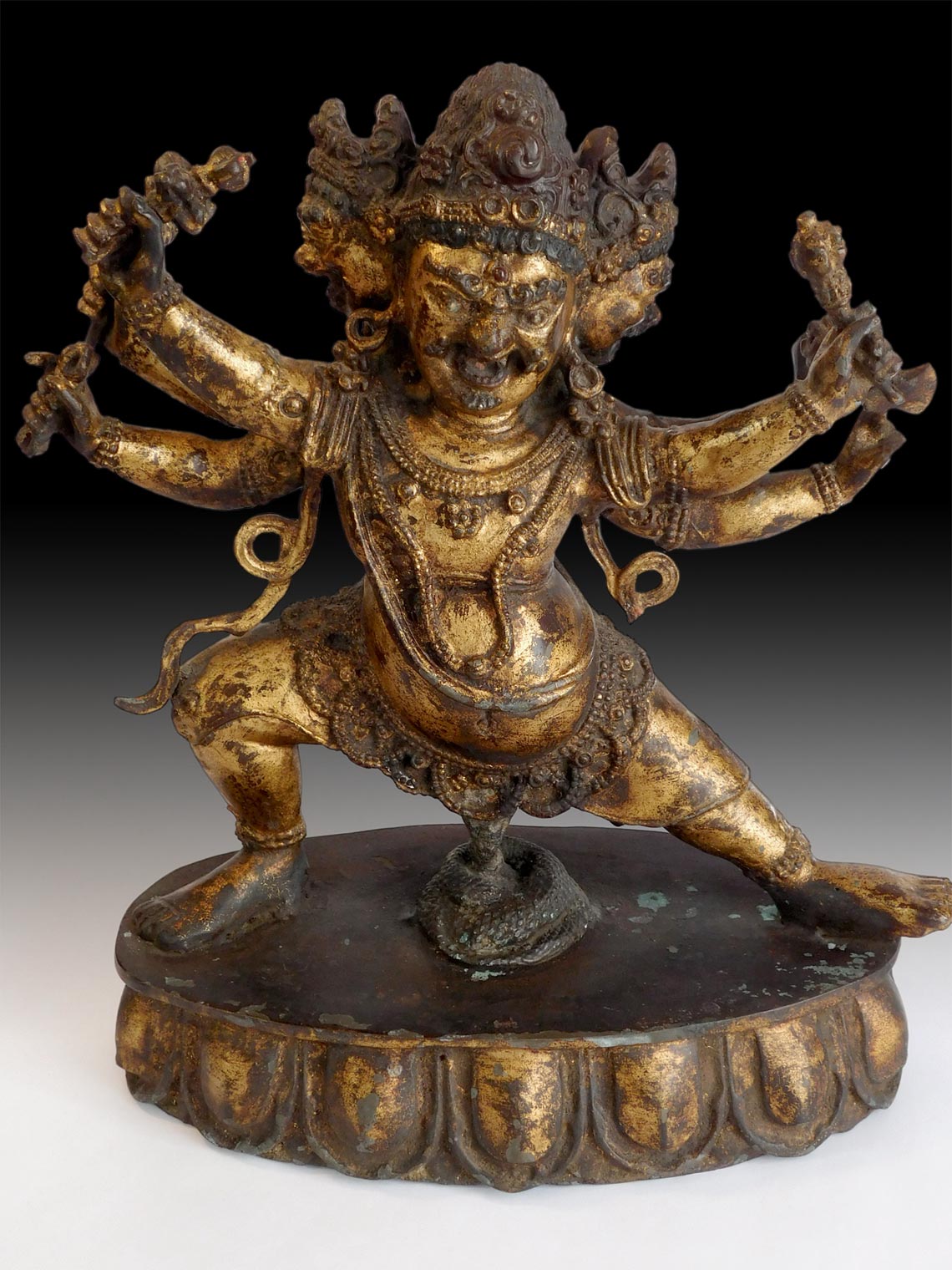
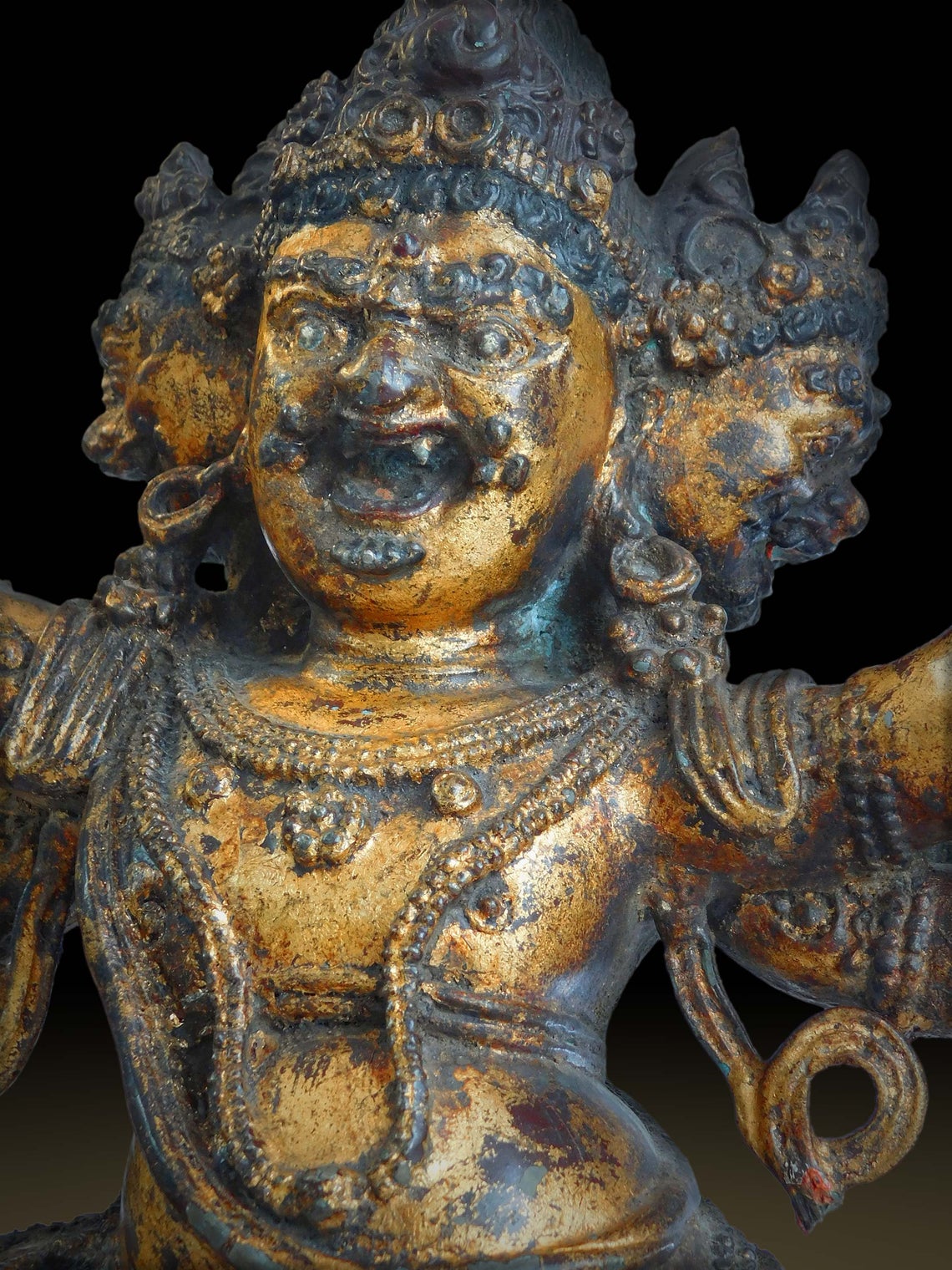
Induced with spirit and poise, the grandeur and powerful body of this Vajrapani statue is a superb example of the monumentality of the 15th century Tantric Mahayana Buddhist art. The dharma guardian is portrayed in fierce emanation. Detailed with tongues and fangs in three howling heads, jeweled with necklaces, and wrapped in swirling scarves that pass around his shoulders flutter to the sides (loss on the left). Thrusting six wide-stretching arms with choppers, battle-axes, and vajra scepters in an active warrior pose (pratayalidha) standing over the Snake Demon Naga. The Dharmapala's terrific three-headed and six-armed form is known as Mahacakra-Vajrapani, the Guardian of the Law and remover of obstacles. Lacquered and gilded, this Qing bronze statue adhered to the tradition of the later Tibetan art when it had penetrated deeply into the cultures of China, Manchuria, Inner, and Outer Mongolia. The broad planed figure indicated its Tibeto-Mongolian school origin around the Ming period in the 17th century.